

Breast Cancer Treatment in Pune
Why Choose Prolife Cancer Centre for Breast Cancer Care in Pune?
At Prolife Cancer Center, Dr. Sumit Shah, a Surgical Oncologist, provides breast cancer consultation and surgical care. Each treatment plan is based on the patient’s examination, imaging, biopsy findings and individual needs. Patients receive guidance on surgical options, additional treatments and follow-up care.
- Personalised consultation and treatment planning with Dr. Sumit Shah.
- Breast-conserving surgery for suitable patients, based on clinical assessment.
- Oncoplastic breast surgery to combine cancer removal with breast reshaping where appropriate.
- Breast reconstruction after mastectomy, including implant options for suitable patients.
- Chemotherapy, hormone therapy and targeted therapy, according to the individual treatment plan.
- Follow-up care to assess recovery and address concerns after treatment.
Looking for Breast Cancer Treatment in Pune? Get directions to Prolife Cancer Centre or Book a Breast Cancer Consultation.


Dr. Sumit Shah — Breast Cancer Surgeon in Pune
Dr. Sumit Shah, founder of Prolife Cancer Centre & Research Institute, Pune, is the Chief Consultant Surgical Oncologist and Robotic Cancer Surgeon. His qualifications include DNB (General Surgery), DNB (Surgical Oncology), and FACS. He provides breast cancer consultation and surgical care, with treatment planning based on each patient’s assessment and reports. Learn more about breast cancer treatment and surgery in Pune. Planning a visit? Get directions to Prolife Cancer Centre.
View Dr. Sumit Shah’s qualifications and profile · Book a consultation
Patient Experiences with Breast Cancer Care
Read feedback from patients and families about their experience with Dr. Sumit Shah and the Prolife team. View patient testimonials.
Ayush Khatri
Best Onco Doctor in pune. My mother was suffering from breast canser His advice and the way he take care of patient is great he give a good attention listen very carefully give good moral support , verry supporting and jolly staff takes care of everything. I strongly recommend dr sumit shah.
Rupesh Sarkale
My mother is 47 years old and she was operated before 2 years ago… She had lump in her breast…so we went for operation and got Dr. Sumit Shah…he did my mother’s operation …and it was successfully done…. after surgery my mother had 4 chemo treatment…now she is done with her all necessary treatment…and its been two years that she is having no problem at all.. I do come to pro-life Cancer center for check up and I am very glad to tell my mother is very healthy and absolutely fine… thanking Dr Sumit Shah…he is fantastic and evergreen person as well as doctor!
Rahul Gandhi
My wife had breast cancer , and it was the very bad stage of my life ….I was afraid and totally unknown that what next…my family Dr Paresh Gandhi recommended us for Sumit Shah…and then my wife’s treatment started at him…she had successfully operation in Prolife Cancer Center…we both are feel secure and happy just because of him, Thank you sir for your support and worthy treatment…!
Breast Cancer Videos by Dr. Sumit Shah
Watch Dr. Sumit Shah explain breast cancer symptoms, diagnosis, surgical options, reconstruction and treatment in Hindi. These videos provide general information; your treatment plan will depend on your individual assessment.
ब्रेस्ट (Breast) कैंसर कैसे होता है | Breast Cancer in Hindi | By Dr. Sumit Shah
ब्रैस्ट कैंसर और प्रेग्नेंसी | Relation Between Breast Cancer & Pregnancy | By Dr. Sumit Shah
ब्रैस्ट कैंसर के बारे में गलतफहमियां | Myths & facts about breast cancer | By Dr. Sumit Shah
स्तनों (ब्रेस्ट ) में दर्द के कारण और इलाज़ | Breast Pain Kyun Hota Hai? | Dr Sumit Shah, Prolife
क्या हर स्तन की गाँठ कैंसर होती है? | Breast lumps causes cancer | Dr Sumit Shah,Cancer Surgeon Pune
क्या Biopsy से Breast Cancer फ़ैल सकता है? | Can Biopsy Lead Spread Of Breast Cancer? | Dr Sumit Shah
Introduction to Breast Cancer
Breast cancer develops due to uncontrolled growth of cells in the breast. There are various types of breast cancer. It depends on area in which cells of breast turn into cancer.
In India, for every 2 women diagnosed newly with breast cancer, 1 woman dies. In India, it is the most common cancer in women and accounts for 14% of all cancers.
According to Globocan 2018 data
- New cases registered: 1,62,468
- Deaths: 87,090
The incidence rates in India begin to rise in the early 30s and peak at ages 50-64 years.
On average, 1 in 28 women is likely to develop breast cancer.
In India, the percentage of developing breast cancer is higher in urban areas, 1 in 22 women is likely to develop breast cancer during her lifetime as compared to rural areas where 1 in 60 women develops breast cancer in her lifetime.
Breast cancer was the most common cancer in women being cities like Mumbai, Thiruvananthapuram, and Dibrugarh. The relative proportion of breast cancer in females varied from 14.4% in Guwahati to 30.3% in Mumbai.
It can begin in different parts of the breast. A breast is divided into 3 main parts:
- Lobules – The lobules are the glands that produce milk.
- Ducts – The ducts are tubes that carry milk to the nipple.
- Connective tissue – The connective tissue (which consists of fibrous and fatty tissue) Surrounds and holds everything together.
Breast cancer occurs when some cells of the breast begin to grow abnormally. These cells divide more rapidly than healthy cells, do and continue to accumulate, forming a lump or mass. Cells may spread (metastasize) through your breast to your lymph nodes or to other parts of your body. Commonly, it begins with cells in the milk-producing ducts (invasive ductal carcinoma). Breast cancer may also begin in the glandular tissue called lobules (invasive lobular carcinoma) or in other cells or tissue within the breast.
Breast cancer can spread outside the breast through blood and lymph vessels. When breast cancer spreads to other parts of the body, it is said to have metastasized.
Types Of Breast Cancer
The most common kinds of breast cancer are –
- Invasive ductal carcinoma – The cancer cells grow outside the ducts into other parts of the breast tissue. Invasive cancer cells can also spread, or metastasize, to other parts of the body.
- Invasive lobular carcinoma – Cancer cells spread from the lobules to the breast tissues that are close by. These invasive cancer cells can also spread to other parts of the body.
Book Appointment
Quick Contact
- Address 557A1/15C Gultekadi, Market Yard Pune, Maharashtra 411037
- Email social.prolife@gmail.com
- Phone +91-9607079019, +91-9607079029
Symptoms of Breast Cancer:
Symptoms of breast cancer vary from person to person and there is no exact definition of what a lump or mass feels like. The best thing is to perform self-examination regularly and if you notice any changes, consult a doctor. However, breast cancer can be detected by mammograms before any symptoms appear.
Some warning signs of breast cancer are
- A breast lump or thickening that feels different from the surrounding tissue.
- Thickening or swelling of part of the breast.
- Irritation or dimpling of breast skin.
- Pulling in of the nipple or pain in the nipple and breast area.
- Nipple discharge other than breast milk, including blood.
- Change in the size, shape or appearance of a breast.
- Changes to the skin over the breast, such as dimpling.
- Peeling, scaling, crusting or flaking of the pigmented area of skin surrounding the nipple (areola) or breast skin.
- Redness or pitting of the skin over your breast, like the skin of an orange.
Keep in mind that these symptoms can happen with other conditions that are not cancer.
If you have any signs or symptoms that worry you then meet Dr. Sumit Shah who is one of the best Breast Cancer Surgeon in Pune.
Risk factors for Breast Cancer:
- Age: As women age, their breast cancer risk increases. Most breast cancers are diagnosed after age 50.
- Family history: A woman’s odds of developing breast cancer increase if a parent, sibling or child has had the disease.
- Early menstruation: Women who began menstruating before age 12 have a higher risk of developing breast cancer.
- Women who have no full-term pregnancies or their first pregnancy after age 30 at a higher risk of breast cancer.
- Previous breast cancer diagnosis: A woman who has had breast cancer once has a higher risk of developing a second cancer.
- Previous radiation therapy to the chest in childhood or early adulthood increases the risk of developing breast cancer.
- Obesity, particularly after menopause, increases a woman’s breast cancer risk.
- Dense breast tissue based on its appearance in a mammogram is a known risk factor for breast cancer.
- Hormone replacement therapy after menopause (if taken for more than 5 years)
- Consumption of contraceptive pills containing high amount of estrogen.
- Varying menstrual cycle shorter or longer than the average 26-29 days.
- Lumps in breast cancer.
- First child after 30 yrs
- Menopause after 55 yrs
- High calorie diet intake
- Moderate alcohol intake
Diagnosis of Breast Cancer:
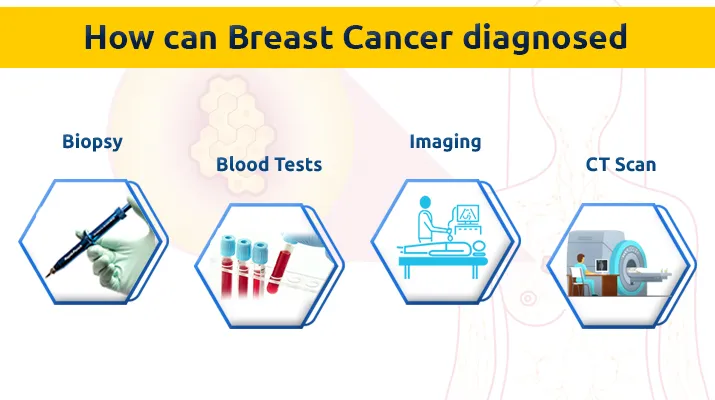
For most patients, a diagnosis of breast cancer starts with an imaging test. It may be regular screening test such a yearly mammogram or can be prompted by a suspicious lump, redness or thickening of the breast skin. Diagnose your cancer at Prolife Cancer Centre Pune, Where you get world-class diagnosis treatment at very affordable cost.
Most breast imaging is carried out with a mammogram or ultrasound. Occasionally, doctors will use magnetic resonance imaging (MRI) or other specialized examinations.
If an unusual or suspicious mass or skin thickening is observed during imaging test, doctors tests sample tissue. In many cases, this biopsy is performed during the initial imaging exam in order to speed up the diagnosis. If in biopsy, cancerous tissue is detected, additional imaging and biopsies may be needed to determine the exact scope of the disease. It also tells whether the cancer has spread to nearby lymph nodes or other parts of the body.
Our Surgeon perform additional analysis of the cancer cells themselves to determine the disease’s receptor subtype. By understanding the subtype, they can develop a comprehensive, personalized treatment plan.
Breast exam: Doctor will examine breasts and lymph nodes in armpit, feeling for any lumps or other abnormalities.
- Mammogram: A mammogram is an X-ray of the breast. Mammograms are commonly used for screening of breast cancer. If an abnormality is detected during mammogram, doctor may recommend a diagnostic mammogram to further evaluate that abnormality.
- Breast ultrasound: Ultrasound may be used to determine whether a new breast lump is a solid mass or a fluid-filled cyst.
Prognosis and follow up
A prognosis is the doctor’s best estimate of how cancer will affect someone and how it will respond to treatment.
Prognosis and survival depend on many factors. Only a doctor familiar with your medical history, the type, stage and characteristics of your cancer, the treatments are chosen and the response to treatment can put all of this information together with survival statistics to arrive at a prognosis.
A prognostic factor is an aspect of cancer or a characteristic of the person that the doctor will consider when making a prognosis.
A predictive factor influences how cancer will respond to a certain treatment. Prognostic and predictive factors both play a part in deciding on a treatment plan and a prognosis.
Doctors use different prognostic and predictive factors for newly diagnosed and recurrent breast cancers.
Breast Cancer Treatment and Surgery Options in Pune
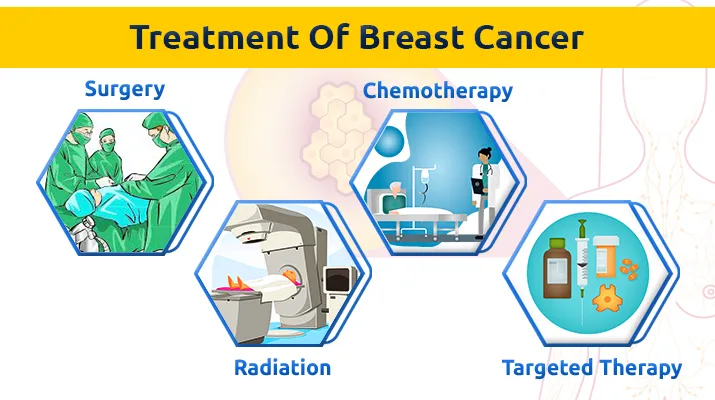
At Prolife Cancer Centre & Research Institute, Pune, Dr. Sumit Shah provides breast cancer consultation and surgical care. Treatment planning starts with a review of the patient’s examination, imaging and biopsy reports. The recommended approach depends on the cancer’s stage, tumour characteristics, receptor test results and the patient’s overall health and preferences.
Breast-Conserving Surgery
Breast-conserving surgery, also called lumpectomy, removes the cancer along with a margin of surrounding tissue while preserving the remaining breast. It may be suitable for selected patients, depending on the tumour’s size, location and other clinical findings. Radiation therapy is usually recommended afterwards.
Mastectomy
Mastectomy involves removing the breast when breast conservation is unsuitable or when it is the patient’s informed choice. Dr. Sumit Shah discusses the reasons for recommending this procedure, the expected recovery and whether reconstruction can be considered.
Oncoplastic Breast Surgery
Oncoplastic surgery combines cancer removal with techniques to reshape the breast. For suitable patients, it can help preserve breast shape after breast-conserving surgery. The approach depends on the extent of tissue removal and the patient’s preferences.
Breast Reconstruction After Mastectomy
Breast reconstruction may involve an implant or the patient’s own tissue. It can be considered at the time of mastectomy or at a later stage. The timing and technique depend on the planned cancer treatment, overall health and assessment by the surgical team.
Lymph Node Assessment
Breast cancer surgery may also include assessment of lymph nodes under the arm. Sentinel lymph node biopsy or other lymph node procedures may be recommended according to the clinical findings and treatment plan.
Chemotherapy
Chemotherapy may be recommended before surgery to shrink the tumour or after surgery to reduce the risk of recurrence. Not every patient needs chemotherapy. The medicines and treatment schedule depend on the cancer’s characteristics and the patient’s health.
Hormone Therapy
Hormone therapy may be recommended for hormone receptor-positive breast cancer. It blocks hormones or their effects on cancer cells and helps reduce the risk of recurrence. The choice and duration of treatment are determined individually.
Targeted Therapy
Targeted therapy acts on specific features of cancer cells. For example, HER2-targeted medicines may be used for HER2-positive breast cancer. Eligibility depends on the tumour’s test results and the overall treatment plan.
Radiation Therapy
Radiation therapy is commonly recommended after breast-conserving surgery and may also be needed after mastectomy in selected cases. A radiation oncologist determines the appropriate technique and schedule. During consultation, patients can discuss how radiation fits into their treatment plan and where it will be delivered.
Discuss Your Breast Cancer Treatment Plan
Whether you have a recent diagnosis or are seeking a surgical second opinion, bring your biopsy report, imaging and previous treatment records for consultation with Dr. Sumit Shah at Prolife Cancer Centre, Market Yard, Pune.
Book a breast cancer consultation or learn more about Dr. Sumit Shah.
At Prolife Cancer Centre, your care for breast cancer is personalized. Your cancer care team will interact closely and work together, and with you, to customize your care, including the most advanced therapies with the least impact on your body. Dr. Sumit Shah is the famous Breast Cancer Surgeon in Pune . If you have any query related breast cancer then contact our experts or visit our Best Cancer Hospital in Pune
Myth #1: Breast cancer is contagious
Myth #2: If you find a lump in your breast means you have breast cancer
Myth #3: Breast cancer affects only women, men do not get breast cancer
Myth #4: If you have a family history of breast cancer, you are likely to develop breast cancer, too
Frequently Asked Questions
1. Who is the best breast cancer surgeon in Pune?
2. What are the different types of breast cancer surgery available at Prolife Cancer Centre?
- Breast Conservation Surgery (Lumpectomy): Removing only the tumor while preserving the breast.
- Mastectomy: Skin-sparing and nipple-sparing options.
- Oncoplastic Breast Surgery: Combining cancer removal with plastic surgery for better cosmetic results.
- Reconstructive Surgery: Post-mastectomy breast implants or flap reconstruction.